What Pilates Is Not
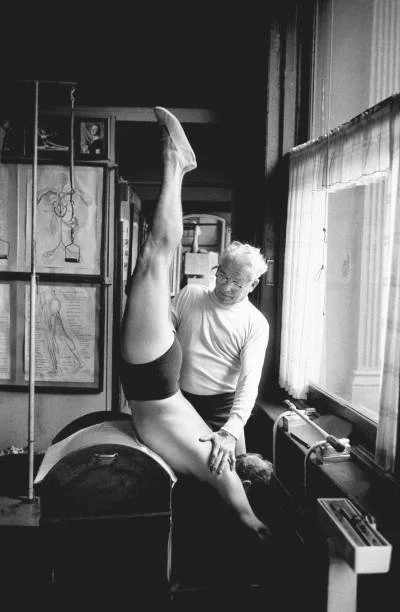
With the fresh start of launching this website, you may be wondering why the first thing I’ve decided to write about is what Pilates is not.
It may seem counterintuitive, but I don’t know about you—I often know what I don’t like before I know what I do. Sometimes, understanding what something is not gives us the space to see more clearly what it actually is. And when it comes to Pilates, I think there is quite a bit we need to clear away first.
This topic was inspired by The Contrology Handbook, written by my teacher, Sandy Shimoda. In many ways, I see this post as an echo of the inquiry she began there: stripping away the noise, setting aside our assumptions, and starting with a blank canvas so that we can paint a clearer picture of what Pilates—or, as it was originally called, Contrology—actually is.
In the book, Sandy shares something her teacher Jay Grimes, who studied directly with Joseph Pilates, once told her:
“It’s not physical therapy, it’s not yoga, it’s not meditation. It’s just hard, sweaty exercise.” -Jay Grimes
That statement became the catalyst for Sandy’s own inquiry. And the more I thought about it, the more I realized just how much there is to unpack within those few words.
Throughout The Contrology Handbook, Sandy explores these distinctions by looking more closely at physical therapy, yoga, and meditation—what each practice is, what it is not, and how that helps us better understand Contrology. If you haven’t read the book, I highly recommend it. It was written for anyone curious about Joe’s work and interested in understanding it more deeply, not just teachers.
Why does distinction matter?
Today, much of the information we consume comes from a quick Google search or scrolling through social media. Pilates, yoga, physical therapy, meditation, strength training, mobility work, and countless other practices are increasingly gathered beneath the broad umbrella of “health,” “wellness,” or “self-care.” Along the way, their language, intentions, and methods begin to blur together.
I find that this often makes it incredibly difficult for the average person—and sometimes even those working within the Pilates industry—to understand where one practice ends and another begins.
That’s not to say, there are commonalities, which I have found between these different forms. Throughout my years studying movement and even unrelated fields such as ceramics, music, tea and art, I’ve encountered similar ideas and lessons echoed in dance, yoga, physical therapy, chiropractic work, Pilates and so much more. One discipline can absolutely inform how we understand another. But similarity does not make them interchangeable.
We cannot blend everything together like a smoothie and expect the result to somehow do it all.
Each practice has its own purpose, history, methodology, and point of view. When we blur those distinctions, we risk losing the very qualities that make each one valuable. Understanding those differences isn’t about deciding that one practice is better than another. It is about becoming clearer about what we are doing, why we are doing it, and what we can reasonably expect it to do for us.
So before we talk about what Pilates is, I want to begin by clearing away a few things that it is not.
What Pilates Is Not
Look online for a definition of Pilates and you may quickly find yourself with conflicting, perplexing or simply incomplete answers.
One source may describe Pilates as “low-impact, slow and controlled exercise.” Another may tell you that its origins lie in physical therapy during World War I. You may see Pilates divided into categories like “mat Pilates” and “reformer Pilates,” as though these are separate methods altogether.
These descriptions contain pieces of the story, but they don’t give us the whole picture.
So, rather than trying to define Pilates in a single sentence, let’s first examine some of these puzzle pieces and begin putting them back together.
Pilates is not physical therapy.
As my teachers Sandy Shimoda and Jay Grimes have explained, Pilates is not physical therapy because the two begin with fundamentally different intentions.
In the book, physical therapist Sachiko Glass describes the purpose of physical therapy as identifying “the source of pain and dysfunction in a patient and providing therapeutic interventions to regain normalized movement and function.”
Sandy makes an important distinction here: physical therapy is a clinical treatment used in response to existing pain, injury, or dysfunction. It operates within the healthcare system and may be prescribed or recommended as part of a patient’s medical care. A physical therapist may use specific exercises, equipment, manual techniques, and isolated movements to address a particular condition or area of the body.
Contrology was created with a different intention.
Joe saw his method as a way to develop and maintain the health of the whole body. Rather than isolating one body part in order to treat an ailment, the exercises ask the body to work as a whole, holistically. Ideally, the practice helps us develop the strength, mobility, coordination, and physical awareness that allow us to function better—and potentially prevent certain problems before they begin.
This does not mean that Pilates and physical therapy cannot complement one another. They often can and provide wonderful benefits, especially for those who have had surgeries or deeper injuries from overuse or general wear and tear over time.
Pilates is not yoga or meditation.
Yoga and meditation have histories and purposes that are distinctly different from Contrology.
Yoga encompasses a vast range of traditions and practices, many of which extend far beyond physical exercise. Its physical practices can range from restorative and meditative to extraordinarily dynamic. A client of mine who trained as a yoga teacher once explained to me that, within the tradition she studied, the physical practice was made to prepare the body to hold longer periods of meditation.
Meditation, meanwhile, asks us to cultivate stillness and awareness of the mind, with traditions that may seek emotional, mental, or spiritual equanimity.
Contrology was created as a vigorous physical practice.
Yes, Pilates requires concentration. Yes, it develops a relationship between the mind and body. And yes, there may be moments of focus in Pilates that might feel similar during a meditative state. But experiencing a meditative quality does not make something meditation.
We are moving. We are exercising. We are interacting with gravity, apparatus, resistance, space, and our own bodies.
Joe even emphasized keeping the eyes open while exercising. We do not move through our everyday lives with our eyes closed—we look, react, orient ourselves, and interact with the world around us. Contrology was intended to prepare us for that world.
Pilates is not therapy.
There is another kind of “therapy” I think is important to distinguish from Pilates—psychotherapy and emotional support.
As teachers, we develop meaningful relationships with the people we teach. We care about them. We want them to succeed, and many of us became teachers precisely because this work had such a profound effect on our own lives that we wanted to share it with others.
But a Pilates teacher is not a mental health professional, and a Pilates lesson is not a therapy session.
A teacher’s responsibility is to observe your movement, teach you the exercises, challenge you appropriately, keep you as safe as reasonably possible, and help you develop a deeper understanding of your body and the method. A good teacher can certainly be compassionate, encouraging, and respectful without assuming responsibility for processing a student’s emotional triggers, trauma, or mental health.
This distinction matters for both student and teacher. There are experiences that belong in a Pilates studio, and there are experiences that deserve the knowledge and care of a qualified mental health professional.
The Pilates studio is, first and foremost, a place to learn and exercise.
Pilates is not dance or sport.
Because Pilates requires coordination, precision, control, and physical skill, it can sometimes look remarkably similar to dance. But their intentions are very different.
Dance is an art form and, in many settings, a performance. Sports likewise involve performance, competition, measurable outcomes, or external goals. A dancer may be evaluated on technique, musicality, expression, or how high a leg can extend. An athlete may be judged by speed, distance, points, wins, or rankings.
Pilates is not a performance.
There is no audience you need to impress. There is no score. Nobody wins because their leg went higher or because they completed an exercise more beautifully than the person beside them.
Your practice is for you.
The exercises give you an opportunity to understand your own body, improve how it functions, and gradually develop greater strength, control, mobility, and efficiency. The person you are ultimately working with, and working for, is yourself.
Pilates is not an aerobics class.
And finally, I may get a lot of hate for this, but I’ll put it out there anyway because I also came from a contemporary Pilates background, so I can say it loud and proud—Pilates was not designed as the synchronized group fitness experience many of us now associate with exercise classes.
You know the scene: music is playing, everyone moves together, and an instructor stands at the front calling out movements while the room follows along. There is nothing inherently wrong with that. These classes can be incredibly fun—there is a reason Jane Fonda became a sensation.
But that format is not how Joe taught Contrology in his studio.
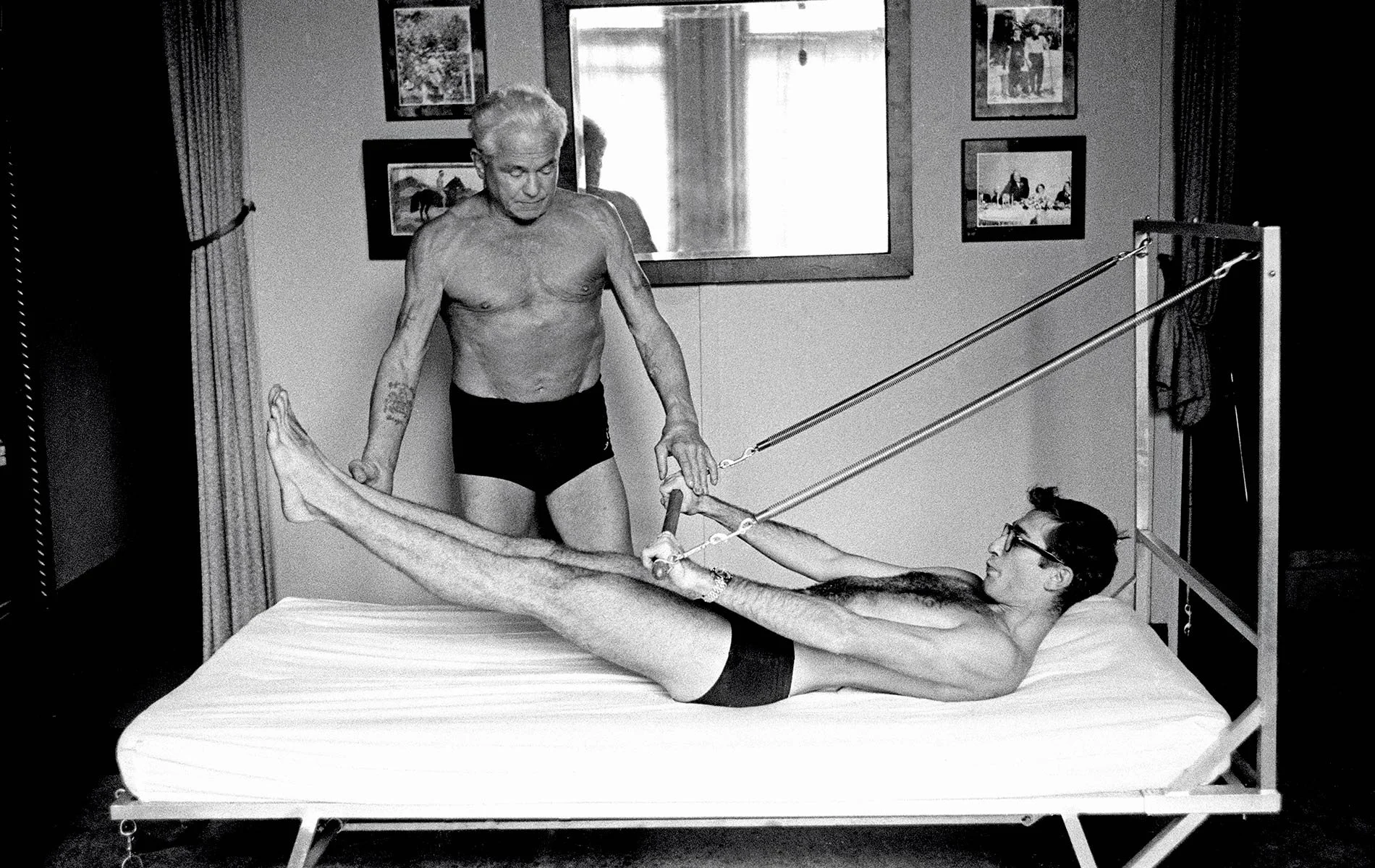
There was no bumping bass or cool jazz playing through the speakers, or any music at all, driving the workout. Students who exercised in the studio together could be seen working through their own sequences of exercises, given according to their individual bodies and needs. They learned their exercises and practiced them with increasing independence while Joe or Clara moved throughout their small New York studio, observing, correcting, challenging, and teaching.
This distinction was incredibly important to me because it changes our understanding of what good Pilates is.
The teacher is not there simply to perform exercises at the front of the room for everyone to imitate, or continuously talk calling out each exercise and how to do it every single time, in the same repetetive way. The goal is to teach you the method so that, over time, you gain independance and practice it, so you can apply those skills into the real world.

So in conclusion, Pilates is not physical therapy. It is not yoga or meditation. It is not psychotherapy. It is not dance or sport. And it is not simply another form of group fitness class such as aerobics.
Each of these disciplines has its own value, and recognizing their differences does not diminish any of them. Quite the opposite: distinction allows us to appreciate each practice for what it was actually designed to do.
So now that we have cleared away some of the associations filling our Instagram feeds, Google searches, and perhaps even our own assumptions, let us return back to the blank canvas.
If all of these things are not Pilates, then what did Joseph Pilates actually create?
That’s where we’ll begin in Part Two: What Contrology Is.