What Contrology Is: Understanding Joseph Pilates' Original Method
In his book Return to Life Through Contrology, Joseph Pilates—or, as I’ll refer to him here, Joe, begins with a simple statement:
“Physical fitness is the first requisite of happiness.” — Joseph Pilates
He goes on to describe physical fitness as the attainment and maintenance of a uniformly developed body and a sound mind, one capable of moving through the many demands of daily life naturally, easily, and with what he calls “spontaneous zest and pleasure.” Every time I heard those words, I find myself enamored by his choice of language.
To move naturally. To move easily. To find satisfaction in what your body can do. And perhaps my favorite: to move through life with zest and pleasure.
That is not an easy task.
I can’t count how many times I’ve walked into a workout already dreading it—too tired, too lazy, too busy, or simply not motivated to exercise that day. I imagine most of us have felt that way at one point or another. Yet Joe wasn’t simply asking us to exercise. He was proposing something much bigger: to attain and maintain a level of physical fitness that allows us to meet everyday life with energy, capability, and even joy.
Even after a century later, his words remain surprisingly relevant to this modern day and age.
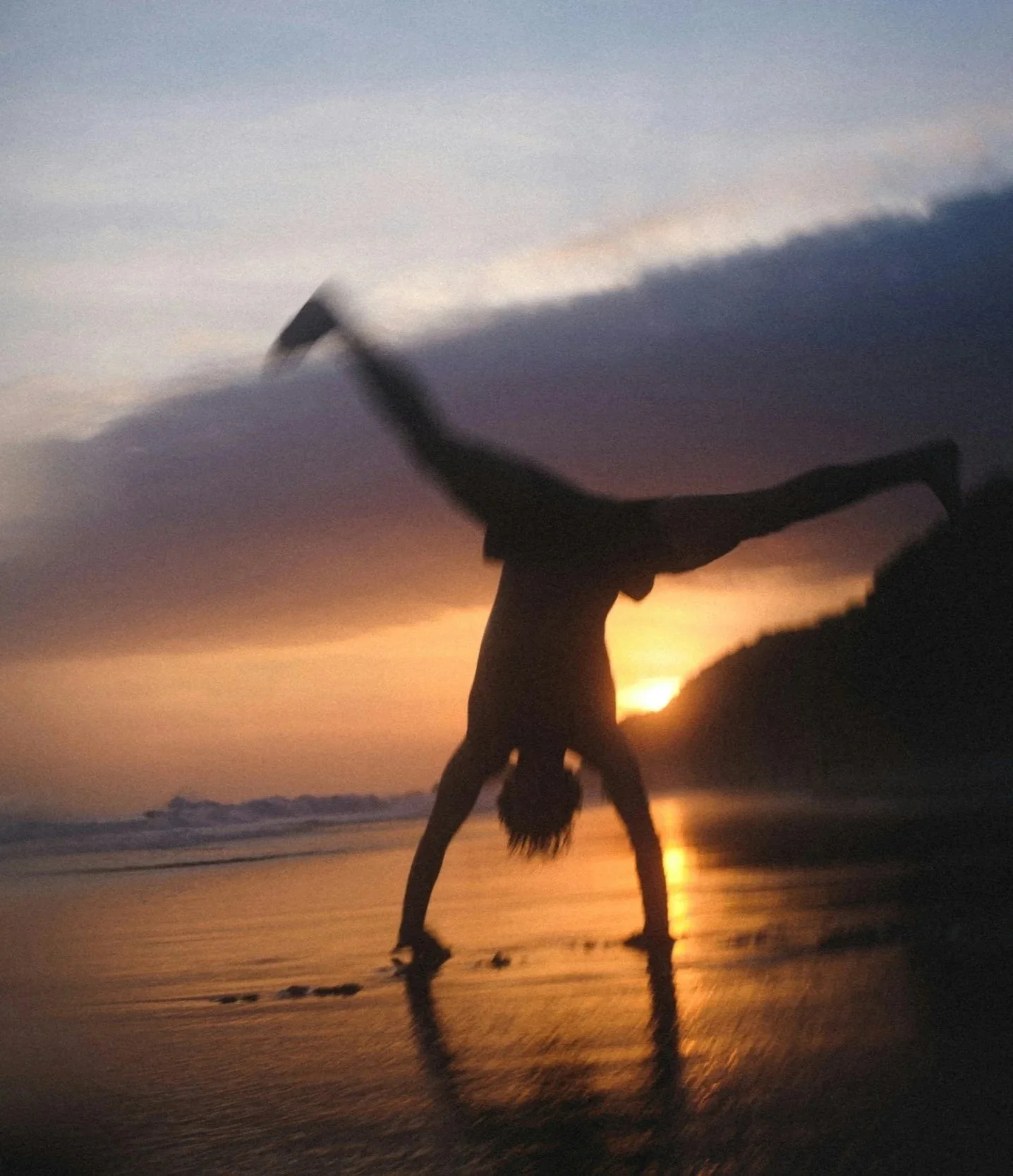
We live in a world increasingly designed around convenience. We can have groceries delivered to our doors, work without leaving our chairs, summon a car with the tap of a screen, and entertain ourselves without moving much at all. Sure, our lives may have become more convenient, but convenience does not necessarily make our bodies more capable.
And that is where Contrology comes in.
Joe designed Contrology as a method for attaining and maintaining physical fitness. He described it as the “complete coordination of body, mind and spirit,” intended to uniformly develop the body, improve posture, restore vitality, invigorate the mind, and elevate the spirit.
These ideas are important because they begin to tell us that Contrology is more than a collection of exercises—and certainly more than a Reformer or a Mat workout.
It is a method.
In The Contrology Handbook, my teacher Sandy Shimoda returns to these passages from Joe’s writing and continues the inquiry:
What exactly is Contrology?
What does it mean to develop the body uniformly?
What makes the exercises corrective?
And what does it mean to practice a method rather than simply perform a series of exercises?
So, just as we cleared away some of the misconceptions surrounding Pilates in Part One: What Pilates Is Not, let’s begin putting the pieces back together and paint a clearer picture of what Joe actually created.
Uniform Development
What does it mean to develop the body uniformly?
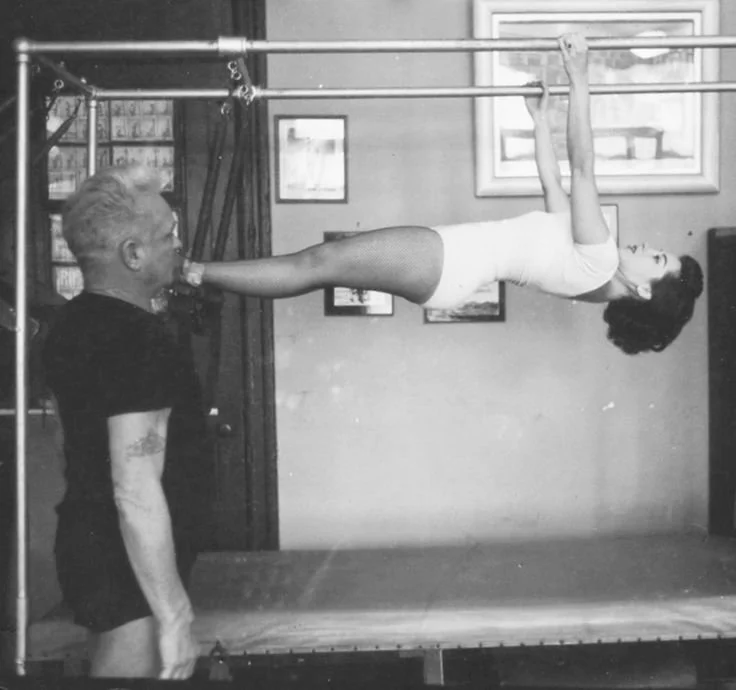
Well, your body is composed of more than just muscles. It is also home to your bones, organs, blood vessels, and your brilliant brain that sends signals through your nervous system, coordinating the many functions and movements of your body. Uniform development is about learning to use and invigorate the whole body, not simply strengthening individual muscles.
Joe designed and refined Contrology to exercise the body as a whole, improve circulation, and develop strength, mobility, and coordination throughout the body. The intention was not to build one muscle at the expense of another, but to develop the smaller and larger muscles to work cooperatively.
Think of it like building a house. Each brick contributes to the structure, and the integrity of the whole depends on how its individual parts work together.
The same principle applies to our bodies.
When the muscles learn to work cooperatively, they support one another, allowing us to perform our daily tasks and enjoy our hobbies with greater efficiency and ease.
Joe described this ideal as “minimum effort and maximum pleasure.”
Picture this: when you walk into the kitchen to grab a cup from the cupboard or pick up your groceries from the car, do you consciously think to yourself:
Extend my arm. Open my hand. Grab the bag. Contract my forearm. Engage my bicep. Lift.
No!
You simply reach for the cup or pick up the groceries.
Your body is already coordinating numerous muscles and joints without requiring you to consciously isolate each one. Your nervous system organizes these movements into actions that become familiar and instinctive through experience.
Contrology teaches us to develop that same cooperation throughout the body, so that movement becomes increasingly coordinated, efficient, and natural.
Corrective Exercise
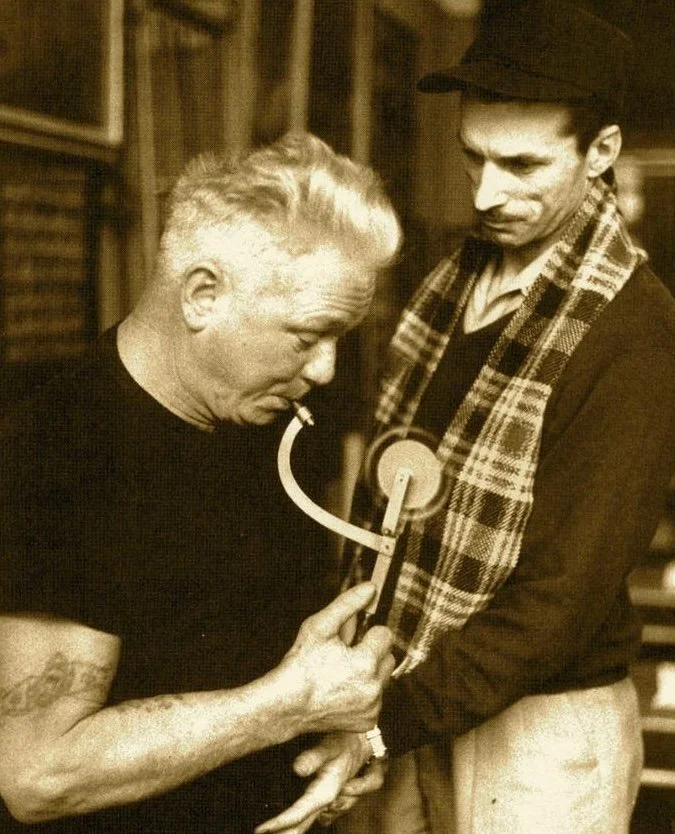
Joe Pilates was remarkably observant of the world around him and clearly ahead of his time. In Return to Life Through Contrology, he reflects on how our modern way of living has changed the demands placed on our bodies.
He compares the physical demands experienced by our cavemen ancestors, who spent much of their lives outdoors, with those of modern society, where convenience and increasingly sedentary lifestyles have altered how we move.
He also recognized that the pressures of modern living contribute to physical and mental fatigue.
Sound familiar?
Nearly a century later, we are still navigating many of these same challenges, only now with smartphones, computers, cars, and countless conveniences that allow us to accomplish more while moving less.
Joe wrote:
“All in all, we do not give our bodies the care that our well-being deserves.”
And perhaps that is why his work continues to resonate today.
Many of us experience stiffness, tension, postural habits, or physical imbalances that develop over time. We may spend hours sitting at a desk, looking down at our phones, or repeating the same movements throughout our workday.
So, what does it mean when we say that Contrology is corrective exercise?
I’ll tell you what it doesn't mean first.
It doesn't mean there is only one correct way for every person to move.
Nor does it mean that a teacher’s job is to correct every little detail of your movement.
Rather, the exercises themselves were designed to help improve how your body functions through consistent practice and repetition. Sandy explains this in a very clear and simple way in The Contrology Handbook:
Corrective Exercise = Improved Movement + Strength + Good Health
The intention is not simply to develop bigger muscles or become more flexible. It is to develop a balance of strength, mobility, coordination, and control that supports the body as a whole.
Joe placed particular importance on the health and mobility of the spine. He believed that our physical age was better reflected in the condition of our spine than by the number of years we had lived. His point was not that flexibility alone determines our health, but that maintaining the ability to move freely throughout our lives is an important part of physical fitness.
And this is also why simply doing more is not necessarily better.
Performing 30 repetitions of an exercise does not automatically make it more effective. Excessive fatigue can compromise the quality of movement, and especially when we have not yet developed the strength or coordination required.
Contrology asks us to develop the body intelligently, not to simply exhaust it.
The goal is not to do more exercises. It is to become better at the work we are already doing.
Which brings us to the method itself.
The Method
You may have heard a Classical Pilates teacher say something along the lines of:
“Classical Pilates has a system.”
Or
“Contrology is a lifestyle, it’s a method.”
These phrases are frequently used, sometimes even interchangeably, but what exactly do they mean?
For a long time, I didn't fully understand the distinction myself.
It wasn't until my teacher Sandy shared this with me, and several other teachers, during a workshop weekend that I began to understand what the method actually referred to.
And once I understood it, the way I approached both my own practice and my teaching became much clearer.
Joe's method can be understood through two essential components:
The systematic, regular practice of exercises appropriately selected for the student's body. (Mat and/or Reformer Routine)
A specific selection of individual exercises chosen to address that student's unique needs. (For You Exercises)
That's the method.
The first component establishes a consistent practice through an organized ordered sequence of exercises.
The second introduces individualized exercises that address what the teacher observes in the student's body.
To understand why these two components matter, let's revisit a little history.
Jay Grimes, whom I was fortunate enough to meet a handful of times, was one of Joe's students. By the time Jay arrived at Joe's studio in the 1960s, Joe had already spent decades developing Contrology. Throughout his lifetime, he continued experimenting with exercises and apparatus, adding some, refining others, and occasionally discarding what he no longer found useful. Jay had the opportunity to experience Joe's work during the later years of his life, after decades of experimentation and refinement. Because he came later in Joe’s life, his work was much more refined than in his earlier years of experimentation.
Through Jay's teachings, Sandy has continued to share that understanding of the method with the next generation of teachers, myself included.
Part One: The Systematic Practice
By the time Jay arrived at Joe's studio, students commonly began their practice on the Reformer or Mat.
The Mat was often given as homework when students were away from the studio, while the Reformer provided a consistent foundation for their work in the studio. The regular practice of these exercises was essential to developing stamina, strength, coordination, and skill.
Students might practice the same exercises in the same order for months, sometimes even years, before they were ready to learn something new.
Today, students and teachers can easily fall into the trap of believing that more exercises equate to more progress.
We collect exercises like Pokémon cards or stamps, thinking that the more we know, the more “advanced” we have become.
But that was never the intention nor the goal.
Unlike many group fitness formats, where routines are frequently changed to provide novelty and variety, the established sequences in Contrology provide students with a consistent framework for practice. Think back to my previous article, What Pilates Is Not, where we explored why Pilates is not dance or aerobics.
In some ways, the practice of Contrology is more comparable to martial arts, where practitioners return to established sequences of movement, such as kata (形) in Karate or Judo, or poomsae (품새) in Taekwondo.
Through repetition, the movements become increasingly familiar. What initially requires conscious thought and concentration gradually becomes more coordinated and instinctive. Your body starts to remember the sequence, the springs, where to place the straps, and what exercise comes next.
As your understanding deepens, you begin to recognize relationships between exercises, notice changes in your body, and develop greater independence in your practice.
You are no longer simply following instructions.
You are learning how to move, independently.
Part Two: The Individualized Exercises
Now, this is where the real magic happens.
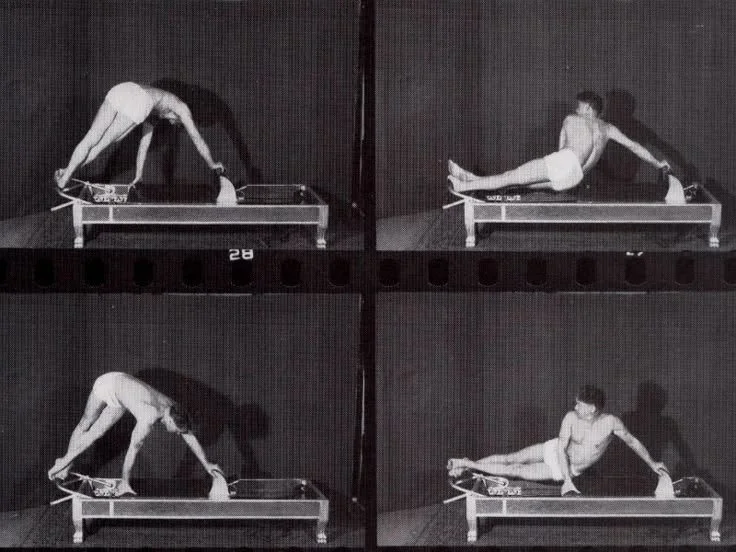
After observing a student working through their Reformer or Mat exercises, Joe would select one or more specific exercises to address what he saw in their body.
These exercises could be performed using a wide range of apparatus and accessories, including:
Spine Corrector
Half Barrel
Ladder Barrel
Sandbag
1 lb Hand Weights
Push-Up Handles
Breath-a-cizer
Magic Circle
Neck Stretcher
Airplane Board
Towel
Cadillac
Wunda Chair
Arm Chair
High Chair
Ped-o-Pul
Guillotine
2 × 4
Foot Corrector
Toe Exerciser
Long Pole
Marbles
Yes, marbles!
And while some of these exercises may appear simple, they can be surprisingly challenging. The specific exercises were some of the most difficult for the student. But every good Pilates teacher knows—sometimes the hardest exercises are the ones you will benefit from the most.
Just like the lessons in everyday life, the same can apply to Contrology. The exercises that reveal our greatest difficulties are the ones that give us the most valuable opportunities to learn.
You may discover that something you thought was easy requires far more coordination than you anticipated. Or that a seemingly small movement exposes a relationship between parts of your body you had never considered before.
That is the process of the work.
Through diligent practice and repetition, what once felt unfamiliar or difficult can gradually become more manageable.
And the payoff can be tremendous.
But I can’t repeat it enough, just remember, the goal of Contrology is not to collect exercises.
There is no requirement to learn all 500+ exercises Joe ever created. Simply learning to perform the exercises selected for you, and developing a deeper understanding of them over time, can provide an extraordinary amount of results. I have witnessed it both in myself and my students. Quality beats quantity any day.
Which brings me to one of the most valuable lessons I have learned throughout my own practice.
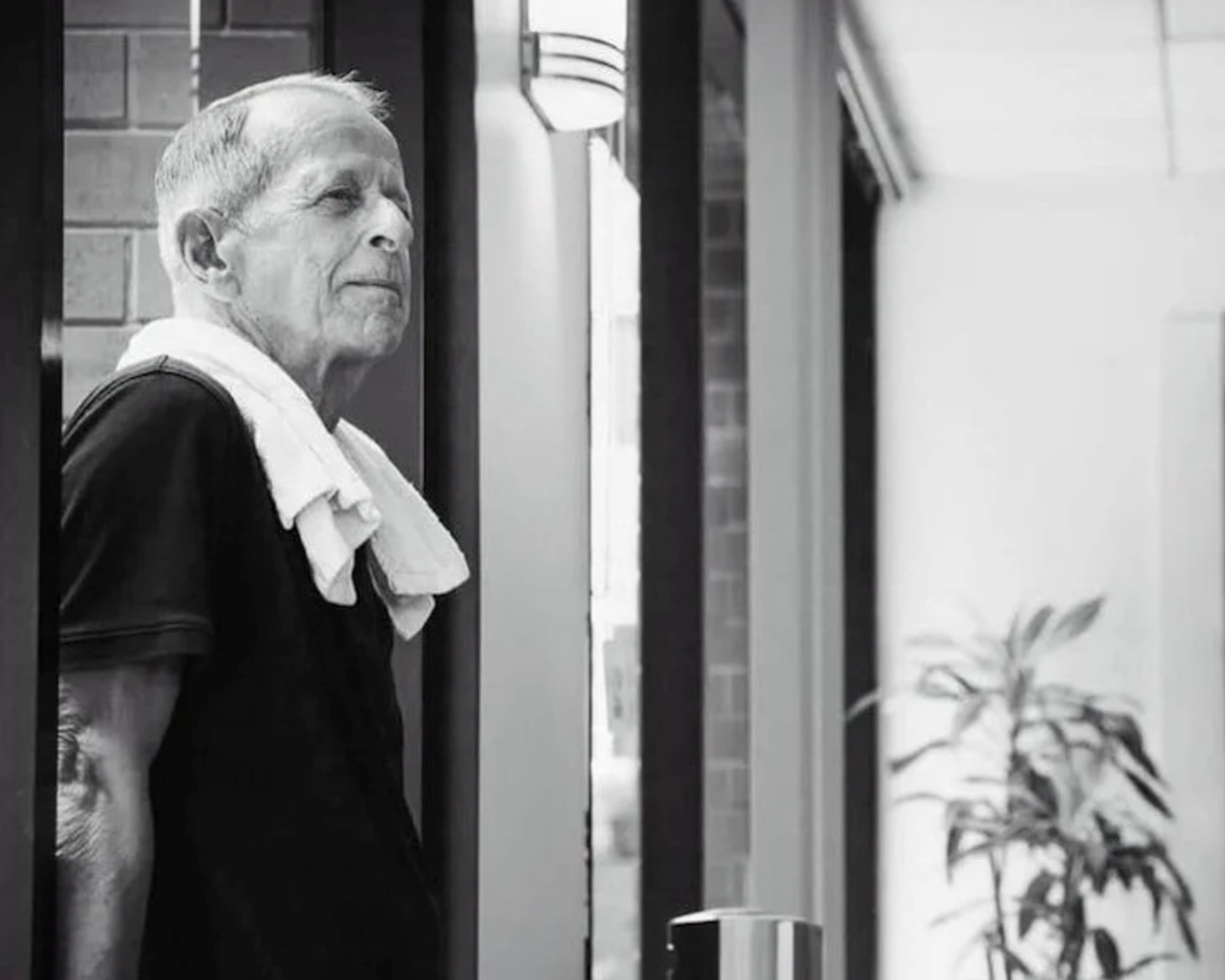
Jay Grimes, at the now closed Vintage Pilates Studio in Sawtelle, Los Angeles, CA.
Trust the Method
Now that we have painted a clearer picture of what Contrology is, I want to leave you with something my teachers have continually reminded me of:
Trust the method.
But Cat, what if I have an injury? What if an exercise bothers me? What if I don't understand what I'm supposed to be doing? What if I don't feel it working? What if I'm not sure I'm doing it correctly?
Believe me, I hear you.
I've worn those same shoes and asked my teachers those very same questions.
And after more than ten years of practicing Pilates, and almost of decade of teaching, I've learned that you don't necessarily need to understand everything about Joe's method before you can begin experiencing its benefits.
Often, just like learning a new language or a hobby or skill, it's more valuable to experience the work first and allow the understanding to develop through practice.
Of course, trusting the method does not mean ignoring pain, disregarding an injury, or refusing to ask questions. Trust must also be earned. Your teacher should know about anything that affects your ability to exercise safely, and the work should be approached with consideration for your individual circumstances.
But it does mean allowing yourself the time to learn.
Not every exercise needs to make perfect sense the first time you encounter it. Not every lesson needs to introduce something new. And not every challenge requires an immediate solution.
Sometimes, the work simply asks us to return to what we have already been given and experience it again with a little more understanding.
I like to think of it this way:
Imagine visiting a bakery that has been making bread from the same recipe for 50 years.
You may not know every ingredient, understand the chemistry behind fermentation, or have any idea how the baker developed their technique.
But you're curious, because you heard it was good.
There must be something special about a recipe that has been passed down and refined through generations of practice.
So you try the bread.
And perhaps, after tasting it, you become curious enough to learn how it was made.
That's how I've come to understand my relationship with Contrology.
I don't need to know everything before I begin. I can experience the work, remain curious, ask questions, and allow my understanding to deepen over time.
The method provides a framework, but the learning comes from the practice.
And the more I return to it, the more I discover that there is still so much to learn.
So I'll leave you with the same message my teacher has passed along to me:
Trust the method. It works.
And if you're curious about what that means for your own body, I invite you to experience it for yourself through a Private Lesson with an experienced teacher.
Whether you're completely new to Classical Pilates or have been practicing for years, there is always something more to discover within the work.
———————————
This article draws inspiration from Joseph Pilates' original writings from his book Return to Life and the teachings of my teacher, Sandy Shimoda. Her work in The Contrology Handbook, along with the knowledge passed down through her teacher Jay Grimes, continues to shape my understanding of Contrology and my approach to teaching it.